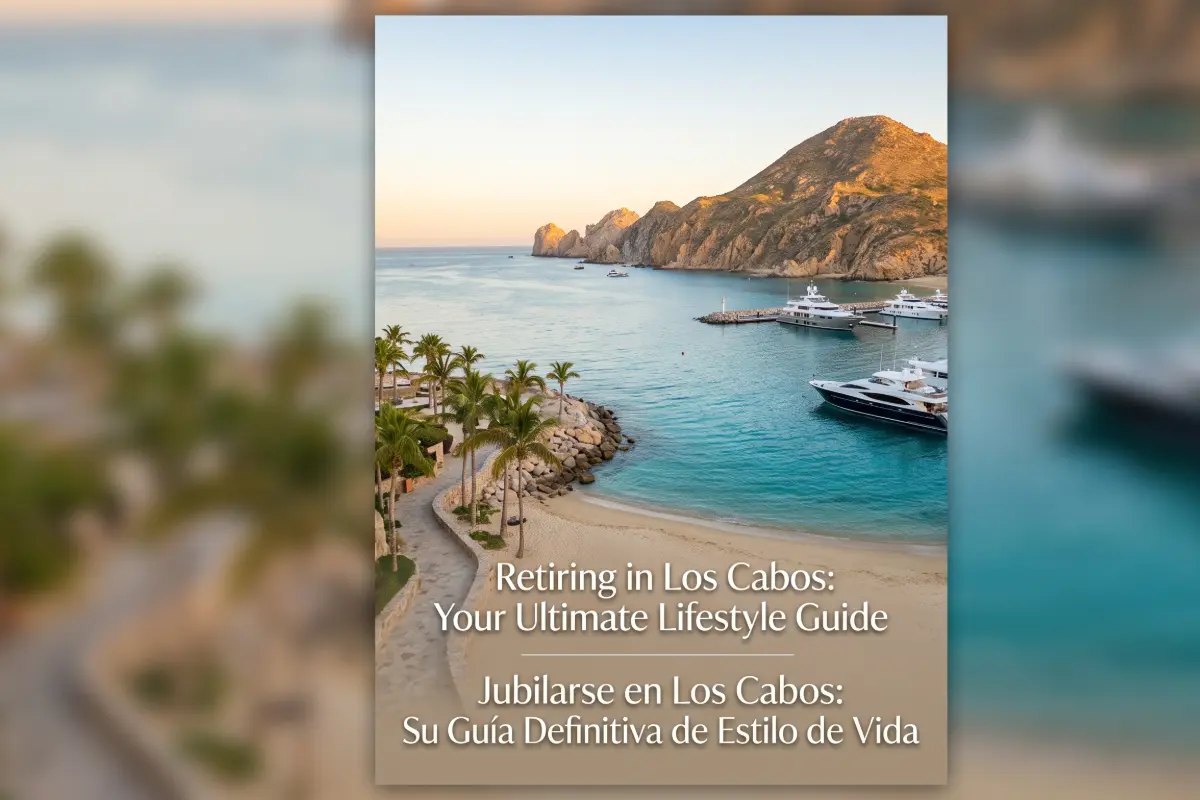
Imagine replacing dark winter mornings and sub-zero forecasts with sunrise walks along the Sea of Cortez. In Los Cabos, 350 days of annual sunshine meet world-class golf, farm-to-table gastronomy, and a welcoming international expat community. For thousands of North American retirees, this coastal haven at the southern tip of Mexico’s Baja California peninsula has evolved from a vacation hot spot into a permanent paradise.
However, moving to Baja requires more than a love for ocean views and warm weather. Successfully relocating demands a clear, factual strategy—from updating your plan for 2026 Mexican residency rules to navigating coastal property laws and creating a realistic budget beyond resort walls. For a deeper look into local housing options before making the move, explore our Los Cabos real estate buyer's guide.
This comprehensive guide breaks down everything you need to know about retiring in Los Cabos. Discover the distinct personalities of Cabo San Lucas and San José del Cabo, itemized cost-of-living tiers, legal visa thresholds, private hospital networks, and coastal real estate ownership.
1. Why Retire in Los Cabos? Sunlight, Safety, and the Expat Advantage
When evaluating why to retire in Cabo, look past the tourist postcards and examine the day-to-day living environment. Los Cabos combines exotic international living with familiar North American conveniences.
The Unmatched Upsides of Baja Living
-
Unrivaled Climate & Outdoor Lifestyle: Boasting over 350 sunny days per year and lower relative humidity than tropical mainland destinations, Los Cabos keeps you active outdoors year-round. Enjoy deep-sea fishing, pickleball, paddleboarding, or playing championship golf courses designed by Jack Nicklaus and Tom Fazio.
-
Direct Flight Access: Situated at the tip of the Baja peninsula, Los Cabos International Airport (SJD) offers non-stop direct flights to dozens of major US and Canadian hubs. Official travel updates from Visit Los Cabos confirm over 550 weekly international flights, making visits from family quick and hassle-free.
-
Top-Tier Safety Profile: Baja California Sur consistently ranks among the safest states in Mexico, as detailed in our comprehensive Baja California Sur safety report for expats. The municipality of Los Cabos invests heavily in dedicated tourism security, well-lit infrastructure, and secure gated communities.
-
Widespread English Proficiency: Thanks to an established international community, professionals across private medical centers, legal practices, real estate brokerages, and local businesses speak fluent English.
The Practical Trade-Offs to Keep in Mind
-
Mid-Summer Desert Heat: While winters (November through April) feature ideal 75°F to 85°F (24°C–29°C) weather, mid-summer months (July through September) bring daytime temperatures exceeding 95°F (35°C) with elevated desert humidity.
-
Higher Living Costs Than Mainland Mexico: Los Cabos operates on a premium resort economy. While significantly less expensive than coastal California, Hawaii, or South Florida, it costs more than interior mainland Mexican towns like Lake Chapala, San Miguel de Allende, or Oaxaca.
-
Seasonal Hurricane Awareness: Late summer and early autumn bring occasional tropical storms from the Pacific Ocean. Modern concrete construction and hurricane shutters make storm preparation straightforward, but seasonal vigilance remains necessary.
2. Cabo San Lucas vs. San José del Cabo: Which Coastal Town Fits Your Style?
Prospective retirees must first decide where to settle. Connected by a scenic 20-mile stretch of four-lane highway known as the Tourist Corridor, the two main cities of Los Cabos deliver entirely different living experiences. Read our detailed Cabo San Lucas vs San José del Cabo comparison to evaluate side-by-side neighborhood metrics.
LOS CABOS REGION
│
┌────────────────────────┴────────────────────────┐
▼ ▼
Cabo San Lucas San José del Cabo
• Energetic, Nightlife & Marina • Historic Art District & Quiet Plazas
• Medano Beach & Deep-Sea Fishing • Farm-to-Table Dining & Traditional Charm
• Best for: High-energy, active social life • Best for: Art, tranquility & cultural depth
Cabo San Lucas: High Energy, Marina Vistas, and Coastal Action
Cabo San Lucas surrounds a world-class 380-slip marina, dramatic Pacific cliffside vistas, and swimmable Medano Beach. It appeals to retirees who thrive in a lively, walkable setting filled with oceanfront dining, boating excursions, and dynamic nightlife.
-
Pedregal: A premier gated enclave built into ocean-facing cliffs, offering cobblestone streets, private beach access, and sweeping views over the Pacific Ocean and Cabo San Lucas Bay.
-
El Tezal: A rapidly growing hillside residential community located 5 minutes above the downtown marina. Expats favor El Tezal for modern ocean-view condominiums, proximity to top supermarkets, and easy corridor access.
-
Cabo Bello & Santa Carmela: Established residential neighborhoods along the Tourist Corridor offering private cove beaches and quiet streets.
San José del Cabo: Historic Architecture, Fine Dining, and Quiet Charm
Located 20 minutes east, San José del Cabo retains the authentic charm of a traditional Mexican town. Its historic center features Spanish colonial architecture, shade-dappled plazas, independent art galleries, and the renowned weekly Thursday night Art Walk. Check out our full San José del Cabo neighborhood guide for street-by-street highlights.
-
Club Campestre: A golf-centric, master-planned community built around an 18-hole Nicklaus Design course, offering private beach club access and mountain views.
-
Puerto Los Cabos: A 2,000-acre resort development featuring a full-service marina, private golf courses, and luxury beachfront estates in the quiet La Playita enclave.
-
Downtown Art District (Centro): Ideal for retirees who prefer a walkable, culturally rich lifestyle surrounded by farm-to-table culinary institutions (such as Flora Farms and Acre) and local artisan markets.
3. Realistic Cost of Living in Los Cabos: 2026 Budget Tiers
Accurately calculating your cost of living in Los Cabos requires evaluating real local expenses rather than national averages. Independent benchmarks from Numbeo's Cost of Living Index show that while luxury knows no limit in Baja, a comfortable retirement lifestyle for a couple ranges between $2,500 and $4,200 USD per month.
Purchasing Power Advantage: While property leases and real estate transactions are listed in USD, everyday living costs—such as fresh seafood, dining out, domestic services, and routine health care—are paid in Mexican Pesos (MXN), giving North American retirees strong purchasing power.
|
Expense Category |
Modest Comfort Tier (USD) |
The Sweet Spot Tier (USD) |
Resort Luxury Tier (USD) |
|
Housing (Rent or HOA + Property Taxes) |
$1,200 – $1,600 |
$1,800 – $2,400 |
$3,500 – $6,000+ |
|
Utilities (Electricity, Water, High-Speed Internet) |
$120 – $200 |
$200 – $380 |
$400 – $800+ |
|
Groceries & Household Supplies |
$400 – $500 |
$600 – $800 |
$900 – $1,300 |
|
Dining Out & Entertainment |
$300 – $450 |
$600 – $900 |
$1,200 – $2,500 |
|
Healthcare & Private Medical Insurance |
$150 – $250 |
$250 – $400 |
$400 – $700 |
|
Transportation & Fuel |
$120 – $180 |
$200 – $300 |
$350 – $500 |
|
ESTIMATED MONTHLY TOTAL: |
$2,290 – $3,180 |
$3,650 – $5,180 |
$6,750 – $11,800+ |
Key Strategies to Lower Your Living Expenses
-
Manage Air Conditioning Costs: Electricity supplied by CFE (Comisión Federal de Electricidad) is subsidized for basic household usage but moves into higher tariff tiers when running air conditioners continuously during summer. Installing rooftop solar panels on owned homes reduces monthly power bills by up to 80–90%.
-
Shop Smart Locally: Combine weekly visits to neighborhood fruit stands (fruterías) and fresh seafood markets with occasional trips to Costco, Walmart, or high-end Mexican grocer La Comer to balance savings with imported comfort goods.
4. Navigating Mexican Visas & Legal Residency Requirements
To reside in Mexico for longer than 180 consecutive days, avoiding reliance on a standard tourist stamp is essential due to strict immigration enforcement. Official processing portals at the Instituto Nacional de Migración (INM) outline how legal residency grants peace of mind, access to local banking, tax benefits, and duty-free household imports.
Temporary vs. Permanent Residency: Which Is Right for You?
-
Temporary Residency (Residencia Temporal): Issued for 1 year initially and renewable for up to 4 years total. This option works perfectly for active retirees testing long-term life in Baja.
-
Permanent Residency (Residencia Permanente): Grants an indefinite legal right to reside in Mexico without renewal requirements. Retirees who meet higher financial criteria can apply directly or convert automatically after completing 4 consecutive years of temporary residency.
2026 Income and Savings Benchmarks
Legally indexed to Mexico’s UMA (Unidad de Medida y Actualización) and published on the Mexican Government Open Data Portal, income thresholds update annually. To qualify through economic solvency under 2026 standards, applicants must satisfy one of the following criteria:
-
Monthly Income Route: Proof of net monthly income (social security, pension, investment dividends, or remote revenue) of approximately $4,300 to $4,500 USD per month over the past 6 months.
-
Savings / Investment Route: Proof of liquid investment or bank account balances averaging roughly $73,000 to $78,000 USD maintained over the past 12 months.
THE TWO-STEP VISA PROCESS
│
Step 1: Consular Interview (Outside Mexico)
• Schedule appointment at a Mexican Consulate in the US/Canada.
• Present 6-12 months of certified bank statements.
• Receive temporary residency visa sticker in the passport.
│
▼
Step 2: INM Card Exchange / "Canje" (Inside Los Cabos)
• Arrive in Mexico within 180 days of visa issuance.
• Visit the local INM office in San José del Cabo or Cabo San Lucas.
• Complete fingerprinting and photos, and receive an official plastic card.
Download our step-by-step Mexican residency application checklist to organize your consulate documents before booking your appointment.
5. Buying vs. Renting Los Cabos Property: Unlocking the Fideicomiso
Real estate advisors strongly recommend renting for 6 to 12 months before purchasing a home. Renting lets you experience seasonal weather shifts and discover whether you prefer the tranquil culture of San José del Cabo or the marina energy of Cabo San Lucas.
When you decide to buy coastal real estate, Mexican federal law guarantees a secure, transparent transaction process for foreign buyers.
How the Fideicomiso (Bank Trust) Protects Foreign Property Owners
Under Article 27 of the Mexican Constitution, foreign citizens cannot hold direct property title within the Restricted Zone—defined as land within 50 kilometers (31 miles) of the coastline or 100 kilometers of international borders.
To protect foreign investments, the Mexican government established the Fideicomiso system:
-
Structure: An authorized Mexican bank acts as the trustee, holding legal title on your behalf.
-
Owner Rights: You are designated as the sole legal beneficiary of the trust. You hold complete legal authority to sell, lease, remodel, occupy, or pass the property to named heirs in your will without probate delays.
-
Validity & Renewal: Valid for 50 years and indefinitely renewable in 50-year increments upon payment of a modest annual bank maintenance fee (typically $500–$700 USD).
Property Taxes (Predial) and Annual Maintenance Costs
-
Property Taxes (Predial): Annual property taxes in Baja California Sur average roughly 0.1% of the municipal assessed value. A $500,000 USD condominium typically pays less than $500 USD per year in total property tax.
-
HOA Dues: Gated communities and luxury condominium developments charge monthly HOA fees ranging from $200 to $600 USD to cover 24/7 security, landscaping, pool maintenance, water purification, and shared amenities.
6. World-Class Healthcare in Los Cabos: Hospitals and Insurance Options
Access to high-caliber medical care remains a top priority for retirees. Fortunately, healthcare in Los Cabos for expats ranks among the finest in Latin America. The region features a modern private health network tailored to international residents, complete with US-trained, bilingual doctors, advanced diagnostic labs, and emergency trauma facilities.
Top Private Hospital Systems in Baja California Sur
-
H+ Hospital Los Cabos: Centrally located along the Tourist Corridor near Palmilla. Facilities at H+ Hospital Los Cabos feature intensive care units, advanced surgical suites, 24/7 emergency care, and over 100 board-certified specialists.
-
BlueNet Hospitals: Located in Cabo San Lucas, offering full emergency services, cardiology, orthopedics, diagnostic imaging, and outpatient consultations.
-
AMC (American Medical Center): Specializes in urgent care, wellness consultations, and elective surgical procedures with a complete bilingual medical staff.
Choosing the Right Medical Insurance Coverage
-
Out-of-Pocket Affordability: Consultations with English-speaking specialists cost between $70 and $120 USD, while prescription medications cost 40–70% less than in the United States.
-
Expat Insurance Policies: Regulatory frameworks overseen by the Mexican Ministry of Health ensure strict hospital standards. Most active retirees maintain an international private health insurance policy with a higher deductible for catastrophic protection while paying cash out-of-pocket for routine healthcare and wellness checkups.
Review our breakdown of expat healthcare and health insurance in Mexico to select the right policy for your needs.
7. Cultivating Your Community and Enjoying Daily Life in Baja
Retiring in Los Cabos involves more than managing logistics—it means adopting a relaxed, health-focused lifestyle centered on community connections.
Building Your Local Expat Network
Connecting with fellow residents in Los Cabos is effortless. The local expat community is welcoming, active, and civic-minded. Popular ways to get involved include:
-
Non-Profit Volunteering: Support established local charities like Liga MAC (providing educational grants for youth in San José) or animal rescue organizations such as Paws Los Cabos.
-
Recreational Sports: Join local pickleball leagues in San José or Cabo, participate in casual golf groups, or join morning beach walking clubs.
-
Cultural Integration: Attend the weekly Art Walk, meet friends at organic farmers' markets, or enroll in conversational Spanish classes.
Importing Vehicles and Customs Rules
Expats holding temporary residency cards can legally drive foreign-plated vehicles in Baja California Sur. Ensure you review import guidelines with SAT (Servicio de Administración Tributaria) to keep your vehicle documentation fully compliant while driving on Highway 1.
Frequently Asked Questions (FAQs) About Retiring in Los Cabos
Can I use US Medicare or Canadian provincial health plans in Los Cabos?
No. Standard US Medicare and Canadian provincial health plans do not cover medical expenses incurred outside their home countries. Expats in Los Cabos rely on private international medical insurance, local Mexican health policies, or pay cash out-of-pocket for affordable local doctor visits.
Is tap water safe to drink in Los Cabos?
While municipal water treatment facilities in Los Cabos meet strict safety standards, older residential piping can affect quality. Virtually all expats, local households, and restaurants use 5-gallon bottled water jugs (garrafones) or install home reverse-osmosis filtration systems for cooking and drinking water.
Can I bring my pets when relocating to Los Cabos?
Yes. Mexico maintains streamlined pet import regulations for domestic dogs and cats arriving from the US or Canada. Pets do not require a formal health certificate if they appear healthy upon arrival. Customs inspectors at Los Cabos International Airport (SJD) conduct a brief visual check to confirm pets are free of illness or parasites.
How do I open a Mexican bank account as a resident?
Once you receive your official temporary or permanent residency card (CURP included), you can open a local Mexican peso or USD account at major banks like BBVA, Banorte, or Santander. You will need your passport, residency card, proof of local address (such as a CFE utility bill), and a local Mexican phone number.
Final Action Steps: Your 30-Day Relocation Checklist
Stepping into an incredible retirement in Baja begins with a clear, structured plan:
-
Step 1: Book a 30-day exploratory stay during the shoulder season (May or October) to spend 2 weeks in San José del Cabo and 2 weeks in Cabo San Lucas.
-
Step 2: Gather bank statements and pension documentation to confirm your financial solvency metrics under current 2026 residency guidelines.
-
Step 3: Schedule your initial visa appointment at a Mexican Consulate in your home country.
-
Step 4: Partner with a trusted local real estate advisor and immigration specialist in Los Cabos to coordinate your arrival and finalize your canje card exchange.
Ready to Start Your Baja Chapter?
Start planning your exploratory trip today, connect with local expat communities, and step into a sunny, rewarding new lifestyle in Los Cabos!